Creating a Facebook Application for Joomla takes just a few steps. After it's created, JFBConnect's Autotune tool will automatically configure the application settings best suited for your site. If you're looking to create a business integration for posting to Facebook Pages, etc, please create a Facebook Business Application instead.
Please note that Facebook requires that your site has a valid SSL certificate and works over an SSL connection. If you don't have https for your site, services like Cloudflare are free and add SSL encryption to your site that works with Facebook.
- Log into Facebook with the account that you want to 'own' your Facebook application.
Note: Facebook requires all applications to be owned by real people. You cannot create a Facebook Application using a Facebook 'Page' account.
- Log into the Facebook Developer Center at:
http://developers.facebook.com/apps
- Click the "Create App" button as shown below:
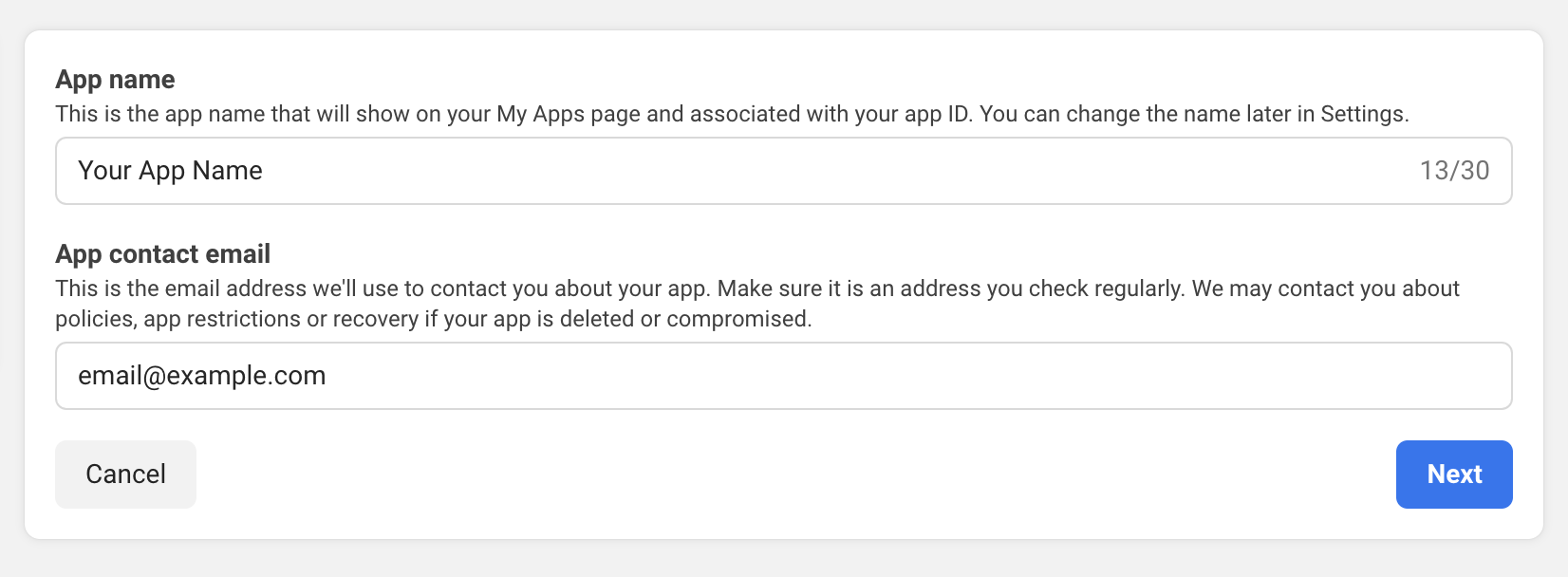
- On the 'Create an App' Details screen, enter an app name and contact email address.
- Click 'Next' button.
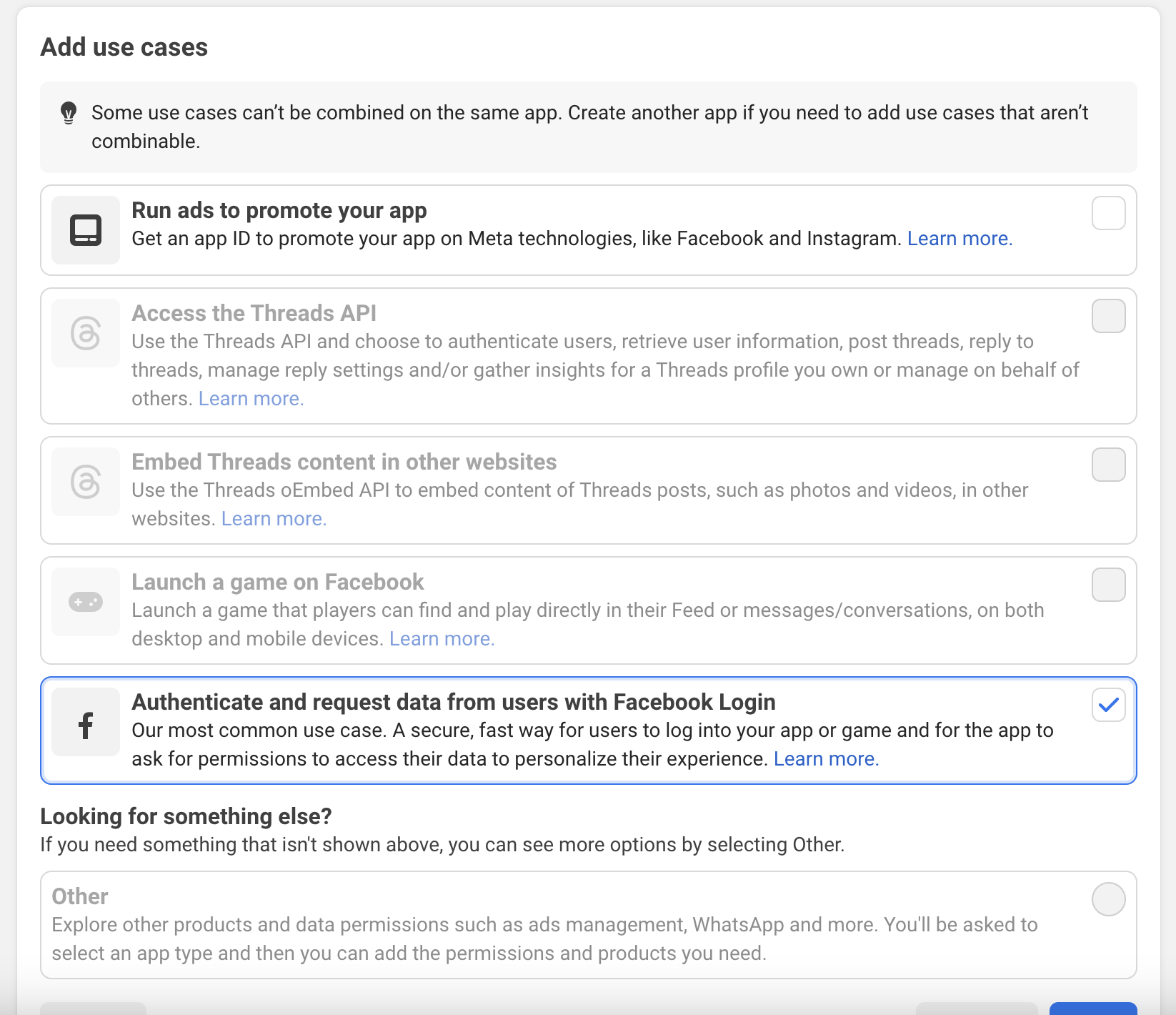
- On the 'Use Cases' section, select "Authenticate and request data from users with Facebook Login"
- Click 'Next' button.
- In order to use Facebook Login, you will need to connect to a Business Portfolio to make your app live. You can choose to skip adding a Business Portfolio until later. (Note, setting up and verifying your Business Portfolio is outside the scope of this setup guide and our JFBConnect software).
- Once you make a selection on the Business Portfolio, click the 'Next' button.
- Click the 'Go to Dashboard' button.
- In your Dashboard, go to App Settings > Basic.
Dashboard > App Settings > Basic
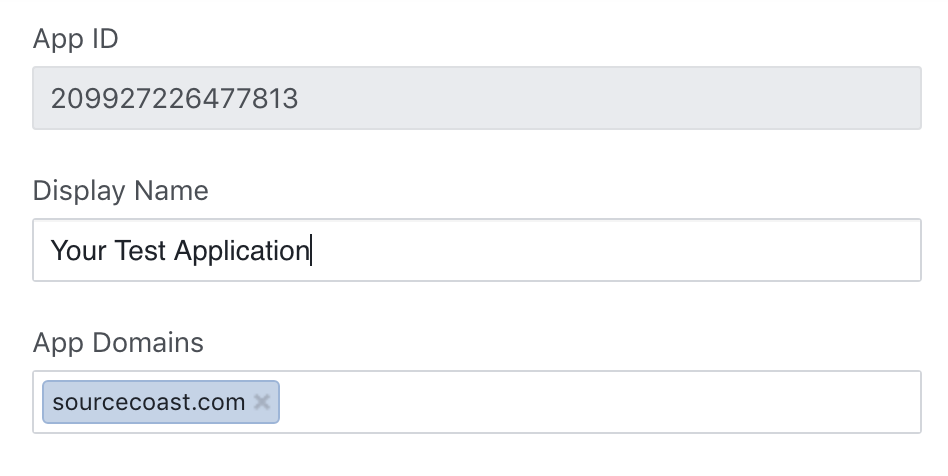
- Navigate into the Settings > Basic section for your app. You should see a large window with information like the image below:
- Click the Show button to reveal your App Secret. Copy your "App ID" and "App Secret" down. You will use it in the Autotune Configuration Tool within JFBConnect.
- Add an "App Domain" by entering text and hitting the 'Enter/Return' key to add the entry. This must match the domain of the Website URL you already entered.
- Select a "Category" for the app.
- Enter a "Privacy Policy URL".
- Enter a "Terms of Service URL".
- For User Data Deletion, select "Data Deletion Callback URL" and provide a link in the following format:
https://yourdomain.com/index.php?option=com_jfbconnect&task=deleteData
- Select an "App Icon"
- Hit the Save Changes button at the bottom of the page.
Dashboard > App Settings > Basic > Add Platform
- Click the "Add Platform" button at the bottom of the Basic Settings page.
- Select "Website" as the platform type and click 'Next'
- Fill in the Site URL section
- Hit the Save Changes button at the bottom of the page.
Dashboard > App Settings > Advanced
- Navigate to the Settings > Advanced tab and set the "Native or Desktop app?" setting to 'No'
Settings > Advanced > Security
- Enable the "Allow API Access to App Settings". This will allow JFBConnect's Autotune Configuration Tool access to setting up the application further.
- Once enabled, click Save Changes.
- Copy the value from "Client Token" and paste into JFBConnect backend > Configuration > Facebook > "Facebook Client Token" setting.
Dashboard > Use Cases
- To edit your app's Facebook Login settings, click on 'Use Cases' in the left menu.
- Click the 'Customize' button for the Facebook Login use case.
Facebook Login > Settings
- Click "Settings".
- Fill out the "Valid OAuth redirect URIs" setting with the following URLs (replacing yourdomain.com with your actual domain name). Secure HTTPS is required for Facebook Login. If you have multiple ways to access your domain (like www or non-www), add them all here, like below. Once done, click Save Changes.
https://yourdomain.com/index.php?option=com_jfbconnect&task=authenticate.callback&provider=facebook
https://www.yourdomain.com/index.php?option=com_jfbconnect&task=authenticate.callback&provider=facebook
- Set "Login from Devices" set to No.
- Set "Login with the JavaScript SDK" set to Yes and add your domain to "Allowed Domains for the JavaScript SDK".
- Set the "Deauthorize Callback URL" setting like the following:
https://yourdomain.com/index.php?option=com_jfbconnect&task=deauthorizeUser
- Click "Save Changes".
- You do not need to configure any additional fields in your Facebook Application. JFBConnect will automatically configure your Application in the best way possible for your Joomla website.
Facebook Login > Permissions
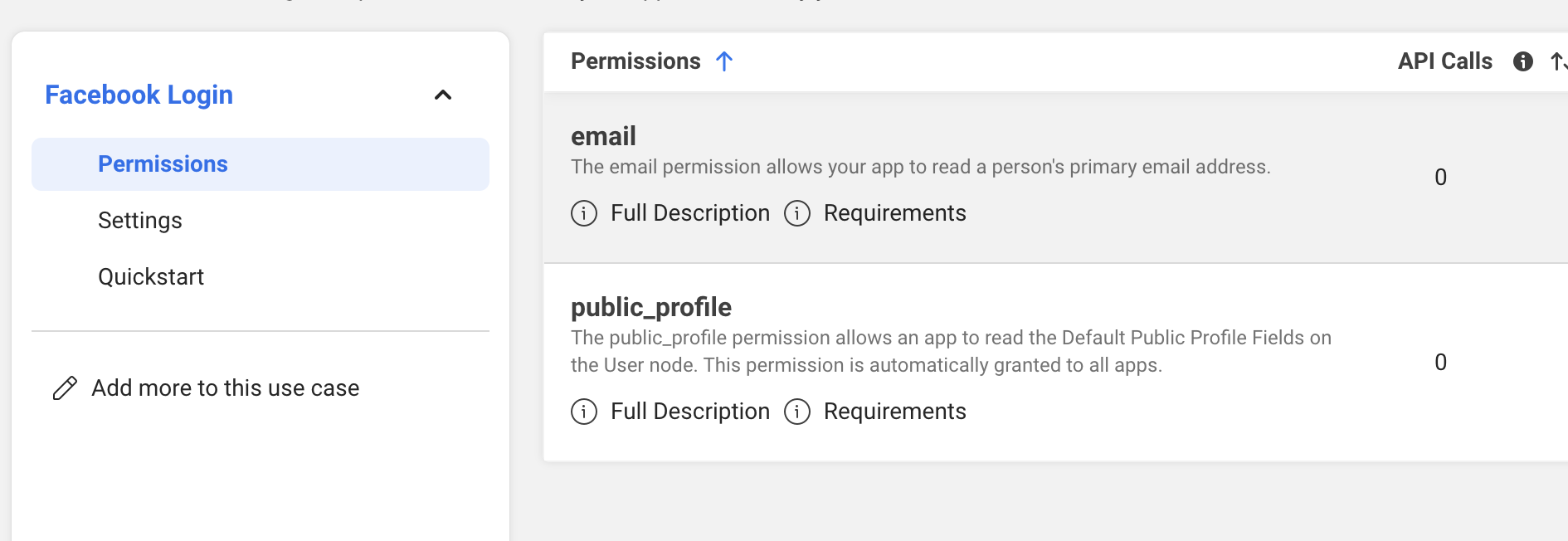
- Click the "Permissions" menu item.
- Click "Add" action for the Email permission.
When you are complete with your Facebook Application, proceed to the Autotune Configuration section of the JFBConnect Configuration guide.